Published April 2026 · By Mike Chen · Carnivore diet practitioner since 2022 · 7 min read
Carnivore Diet vs Keto: Key Differences, Benefits & Which Is Right for You (2026)
Both the carnivore diet and the ketogenic (keto) diet are low-carbohydrate approaches that put your body into ketosis. But they differ significantly in food variety, macronutrient ratios, and philosophy. A 2021 study in Current Developments in Nutrition surveyed over 2,000 carnivore dieters and found 95% reported improved overall health, while keto has decades of clinical research behind it for epilepsy, metabolic syndrome, and weight loss. This guide breaks down exactly how they compare so you can choose the right approach for your goals.
What Is the Carnivore Diet?
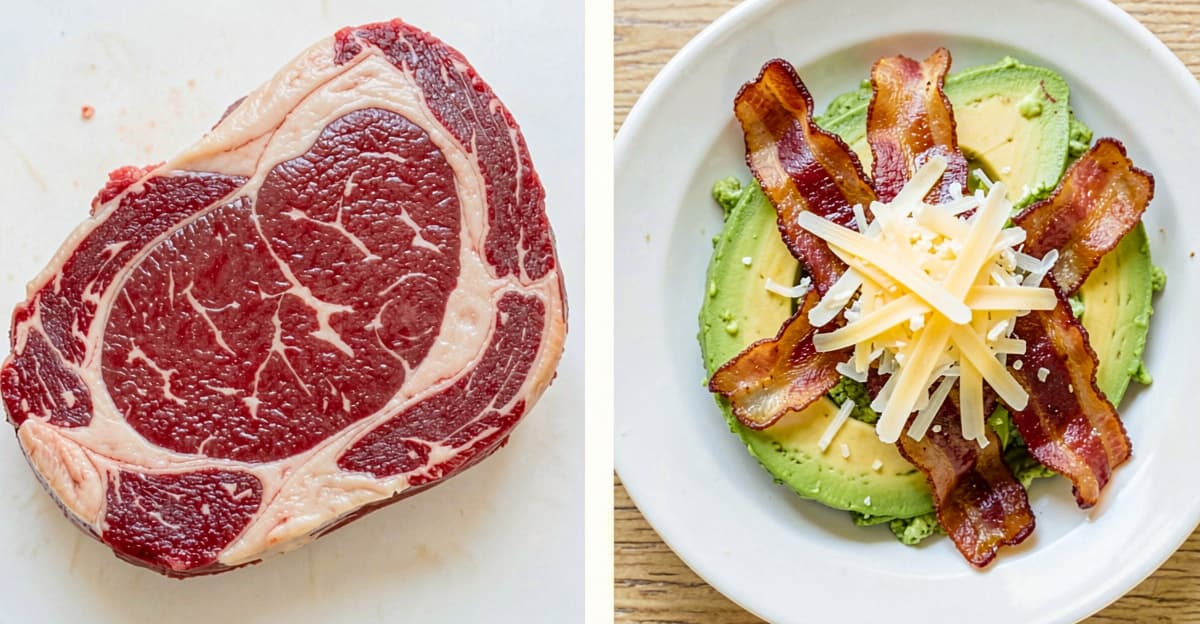
The carnivore diet is an all-animal-food diet. You eat meat, fish, eggs, and animal fats. Most versions exclude all plant foods entirely. Carbohydrate intake is effectively zero. The emphasis is on elimination -- removing every potential dietary irritant to achieve optimal health. There are several variations, from the strict Lion Diet (beef, salt, and water only) to the more relaxed dirty carnivore approach that includes processed meats and dairy. Learn more about the science-backed benefits of the carnivore diet.
What Is the Keto Diet?
The ketogenic diet restricts carbohydrates to roughly 20-50g per day while maintaining high fat intake (typically 70-75% of calories) and moderate protein (20-25%). Unlike carnivore, keto allows plant foods like leafy greens, avocados, nuts, seeds, and berries in limited quantities. The goal is maintaining nutritional ketosis. Originally developed in the 1920s for epilepsy management, keto has become one of the most popular dietary approaches for weight loss and metabolic health. For a research overview, see Harvard T.H. Chan School of Public Health's keto guide.
Comprehensive Side-by-Side Comparison
| Category | Carnivore Diet | Keto Diet |
|---|---|---|
| Carbs | ~0g per day | 20-50g per day |
| Protein | High (35-50% of calories) | Moderate (20-25%) |
| Fat | High (50-65%) | Very high (70-75%) |
| Plant foods | None | Low-carb vegetables, nuts, seeds, berries |
| Allowed meats | All animal meats, fish, eggs | All meats (within macro limits) |
| Dairy | Varies by version (butter, cheese often allowed) | Full-fat dairy encouraged (cream, cheese, butter) |
| Tracking required | Minimal (eat meat until full) | Yes (must track macros to stay in ketosis) |
| Ketosis | Yes (naturally) | Yes (if macros are managed) |
| Food variety | Low | Moderate |
| Simplicity | Very high | Moderate |
| Typical weight loss (month 1) | 10-20 lbs | 8-15 lbs |
| Elimination benefit | Removes all plant allergens and anti-nutrients | Reduces but does not eliminate plant compounds |
| Research base | Growing (observational studies, case reports) | Extensive (RCTs for epilepsy, metabolic syndrome, weight loss) |
Carnivore Diet: Pros & Cons
Pros
- - Extreme simplicity, no macro tracking needed
- - Ultimate elimination diet for food sensitivities
- - Strong satiety and natural appetite regulation
- - Often faster weight loss results
- - Removes all plant anti-nutrients and allergens
- - High protein supports muscle retention
Cons
- - Very restrictive, limited food variety
- - Harder to maintain socially
- - Initial adaptation can be uncomfortable
- - Less research than keto
- - No plant-based micronutrients (debated)
- - Can be more expensive (meat-only diet)
Keto Diet: Pros & Cons
Pros
- - More food variety and recipe options
- - Well-researched with clinical evidence
- - Easier social compliance (vegetables allowed)
- - Proven benefits for epilepsy and neurological conditions
- - Can include plant micronutrients
- - Flexible carb threshold (20-50g)
Cons
- - Requires macro tracking to stay in ketosis
- - Easy to accidentally exceed carb limits
- - “Dirty keto” can include processed foods
- - Does not eliminate all potential food sensitivities
- - Lower protein can reduce satiety
- - More complex meal planning
Who Should Choose Carnivore?
The carnivore diet is ideal if you have autoimmune conditions, digestive issues (IBS, SIBO, Crohn's), food sensitivities you have not been able to identify, or if you want the absolute simplest approach to eating. It is also a good fit if you have tried keto but still experience inflammation or digestive symptoms -- the remaining plant foods on keto may be the culprit. For the most aggressive elimination approach, consider the Lion Diet -- beef, salt, and water only.
Who Should Choose Keto?
Keto is a better starting point if you enjoy food variety, cook for a family, or have social situations that make an all-meat diet impractical. It is also well-suited for people managing epilepsy or neurological conditions where ketone levels need to be precisely controlled. If you tolerate plant foods well, keto gives you the metabolic benefits of ketosis with more flexibility.
The Carnivore-to-Keto Spectrum
These diets are not binary choices -- they exist on a spectrum. From most restrictive to most flexible:
- Lion Diet -- Beef, salt, water only (maximum elimination)
- Strict Carnivore -- All animal foods, no plant foods
- Dirty Carnivore -- Processed meats, dairy, condiments allowed
- Animal-Based -- Meat + fruit + honey (Paul Saladino's approach)
- Carnivore-Keto Hybrid -- 80-90% animal foods with select low-carb vegetables
- Standard Keto -- 70% fat, 25% protein, 5% carbs from any low-carb source
Can You Combine Both Approaches?
Absolutely. Many people start with a strict 30-day carnivore reset, then transition to a “carnivore-ish keto” approach -- keeping animal foods as 80-90% of their diet while reintroducing select low-carb vegetables. This lets you identify your personal trigger foods while maintaining dietary flexibility. Track what you reintroduce and how you feel to build your own optimal diet. Read our beginner's guide for a step-by-step starting protocol.
Frequently Asked Questions
What is the main difference between carnivore and keto?
The main difference is food variety. The carnivore diet allows only animal foods with zero carbohydrates, while keto allows plant foods like vegetables, nuts, seeds, and berries as long as total carbs stay under 20-50g per day.
Is carnivore or keto better for weight loss?
Both diets are effective for weight loss, but carnivore often produces faster initial results due to higher protein intake and stronger satiety signals. A 2021 study found 93% of carnivore dieters reported improved body composition. Keto is also well-researched for weight loss but requires more careful macro tracking.
Do you need to track macros on carnivore vs keto?
Keto requires macro tracking to ensure you stay under 20-50g of carbs and maintain the right fat-to-protein ratio for ketosis. Carnivore generally does not require tracking -- you eat meat until full. However, some people find tracking with Carnivore Max helpful for optimizing results on either diet.
Can you switch between carnivore and keto?
Yes. Many people start with a 30-day strict carnivore reset, then transition to a carnivore-keto hybrid by reintroducing select low-carb vegetables. This approach lets you identify food sensitivities while maintaining dietary flexibility long-term.
Is the carnivore diet a form of keto?
Technically yes -- the carnivore diet naturally produces ketosis because it contains virtually zero carbohydrates. However, carnivore is much higher in protein (35-50% of calories) than standard keto (20-25%), and the philosophy is different: carnivore focuses on elimination while keto focuses on macronutrient ratios.
Which diet is better for autoimmune conditions?
The carnivore diet is generally considered better for autoimmune conditions because it eliminates all plant foods, including compounds like lectins, oxalates, and phytates that can trigger immune responses. For the most aggressive autoimmune approach, the Lion Diet (beef, salt, water only) is often recommended.
Track your carnivore or keto macros with Carnivore Max
Track meals, macros, and your progress with the #1 carnivore diet tracker.
Download Free on the App Store