Published April 2026 · By Mike Chen · Carnivore diet practitioner since 2022 · 10 min read
The Lion Diet Explained: Rules, Benefits & How It Compares to Carnivore (2026)
The Lion Diet is the most restrictive version of the carnivore diet. You eat ruminant meat, salt, and water -- nothing else. Popularized by Mikhaila Peterson, who credits the protocol with putting her juvenile rheumatoid arthritis into remission, the Lion Diet has become the go-to elimination approach for people with autoimmune conditions, chronic inflammation, and unresolved food sensitivities. This guide covers everything you need to know: the rules, the science, how it compares to standard carnivore, and how to start your own 30-day protocol.
What Is the Lion Diet?
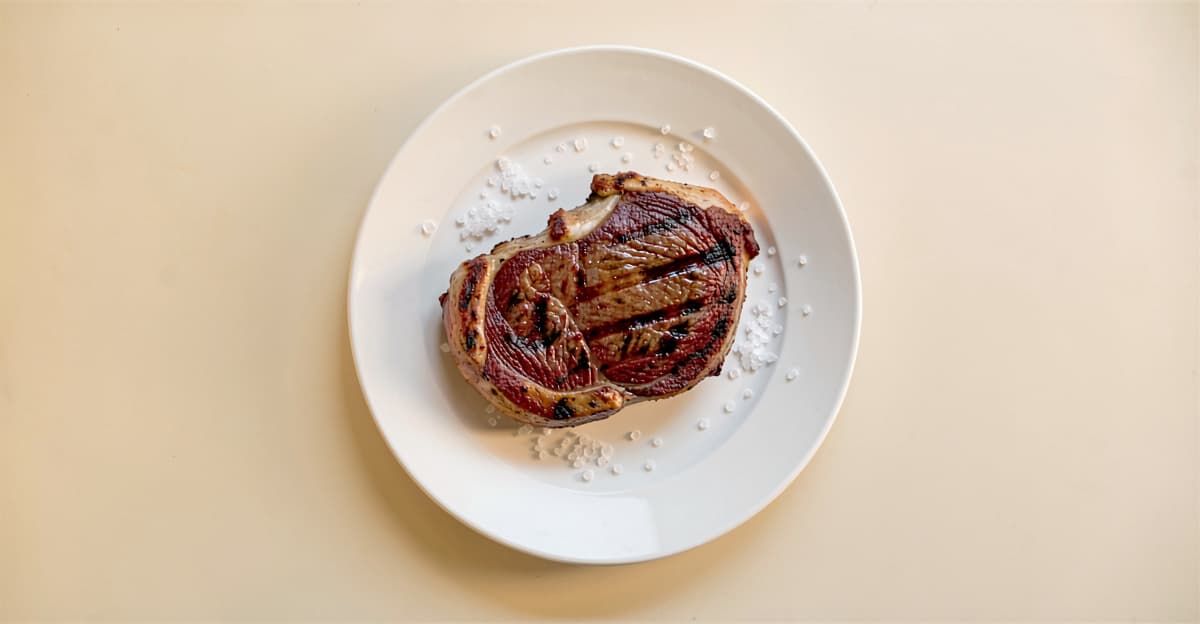
The Lion Diet is an elimination protocol that strips your diet down to the three least reactive foods: ruminant meat (beef, lamb, or bison), salt, and water. The name comes from the idea that lions eat a single food source -- meat -- and thrive on it. Unlike the broader carnivore diet, which allows eggs, pork, poultry, fish, and dairy, the Lion Diet removes every food that has any meaningful allergen or sensitivity risk.
Mikhaila Peterson developed the approach after years of trying progressively more restrictive diets to manage her autoimmune conditions. She found that even foods considered “safe” on carnivore -- like eggs and dairy -- triggered inflammatory responses for her. By narrowing to ruminant meat only, she was able to establish a clean baseline and then systematically test foods one at a time.
Lion Diet Rules
What You CAN Eat
- Ruminant meat: Beef, lamb, bison, elk, venison, and goat. Any cut -- steaks, ground meat, roasts, ribs, organ meats from ruminants.
- Salt: Sea salt, Himalayan pink salt, or any unprocessed salt for electrolytes and flavor.
- Water: Still or sparkling water. This is your only beverage.
- Ruminant fat: Tallow, suet, and the fat rendered from your cooking.
What You CANNOT Eat
- Pork and poultry: Higher in omega-6 fatty acids and more likely to be conventionally raised with inflammatory feed profiles.
- Fish and seafood: While generally healthy, fish can carry histamine and mercury concerns that complicate an elimination protocol.
- Eggs: One of the top 8 allergens globally. Egg whites in particular contain proteins that provoke immune responses in sensitive individuals.
- Dairy: Casein and lactose are common triggers for inflammation, digestive distress, and skin issues.
- All plant foods: Vegetables, fruit, grains, nuts, seeds, spices, and seasonings beyond salt are excluded.
- Coffee and tea: Both are plant-derived and contain compounds that can affect gut permeability and cortisol.
- Processed meats: Bacon, sausages, deli meat, and jerky often contain sugar, nitrates, and other additives.
Lion Diet vs Carnivore Diet
The Lion Diet is a subset of the carnivore diet -- think of it as carnivore with training wheels removed. Here is how they compare:
| Category | Lion Diet | Carnivore Diet |
|---|---|---|
| Meat sources | Ruminants only (beef, lamb, bison) | All animal meats (beef, pork, chicken, fish) |
| Eggs | Not allowed | Allowed |
| Dairy | Not allowed | Often allowed (butter, cheese, cream) |
| Fish & seafood | Not allowed | Allowed |
| Seasonings | Salt only | Salt, pepper, some spices |
| Beverages | Water only | Water, bone broth, some allow coffee |
| Primary purpose | Elimination protocol | Long-term lifestyle diet |
| Food variety | Very low | Low to moderate |
Benefits of the Lion Diet
1. The Ultimate Elimination Protocol
Standard elimination diets still allow dozens of foods that can trigger immune responses. The Lion Diet narrows your intake to the least allergenic foods available. Ruminant meat has virtually no documented allergenicity -- beef allergy affects less than 0.3% of the population, making it one of the safest foods to use as a baseline. This makes it far more effective than conventional elimination diets for people with complex or overlapping sensitivities.
2. Autoimmune Symptom Relief
Autoimmune conditions like rheumatoid arthritis, Hashimoto's thyroiditis, psoriasis, and Crohn's disease are driven by an overactive immune system attacking the body's own tissues. By removing every potential dietary immune trigger simultaneously, the Lion Diet gives the immune system a chance to calm down. Many practitioners report measurable drops in inflammatory markers like CRP and ESR within 30-60 days. Mikhaila Peterson has documented her own journey from severe juvenile rheumatoid arthritis, depression, and chronic fatigue to complete symptom remission.
3. Digestive Healing
The Lion Diet removes fiber, FODMAPs, lectins, oxalates, and every other plant compound that can irritate the gut lining. For people with IBS, SIBO, or inflammatory bowel disease, this can provide dramatic relief. Beef is one of the most easily digested proteins, with a protein digestibility-corrected amino acid score (PDCAAS) of 0.92. Without fermentable carbohydrates, bloating and gas often resolve within days.
4. Mental Clarity
Brain fog, anxiety, and depression are commonly reported to improve on the Lion Diet. With zero carbohydrates, the brain runs primarily on ketones -- a clean, stable fuel source. Removing potential neuroinflammatory triggers (gluten, dairy casein, seed oils) can have noticeable effects on cognitive function. The mental clarity benefit is one of the most frequently cited reasons people stay on the protocol.
5. Radical Simplicity
There is no simpler diet on earth. You buy beef, you cook beef, you eat beef. No meal planning, no recipe searching, no macro calculating. This eliminates decision fatigue entirely and makes compliance straightforward. Grocery shopping takes five minutes. Many people find this simplicity psychologically freeing after years of complicated dietary protocols.
Who Should Try the Lion Diet?
The Lion Diet is not for everyone. It is specifically designed for people who need the most aggressive elimination approach possible:
- Autoimmune conditions: If you have been diagnosed with an autoimmune disease and have not found relief through other dietary approaches, the Lion Diet removes more variables than any other protocol.
- Unresolved food sensitivities:If you react to “everything” and cannot identify your triggers, the Lion Diet provides the cleanest possible baseline for reintroduction testing.
- Stalled on standard carnivore: Some people do well on carnivore but still experience lingering symptoms. Eggs, dairy, pork, or histamine-rich fish may be the issue. The Lion Diet tests this hypothesis.
- Reset protocol: Even without specific health conditions, some people use 30 days of Lion Diet as a hard reset before transitioning to a broader carnivore approach.
How to Start: The 30-Day Lion Diet Protocol
Week 1: Transition
Remove all non-ruminant foods. Eat beef (any cut), salt, and water only. Expect adaptation symptoms: headaches, fatigue, irritability, and digestive changes are normal during the first 3-7 days as your body shifts to fat metabolism. Increase salt intake to 2-3 teaspoons per day to manage electrolytes. Eat until you are full -- do not restrict calories during adaptation.
Week 2: Adaptation
Most adaptation symptoms resolve by day 7-10. Energy levels begin to stabilize. Appetite naturally regulates -- you may find yourself eating less without trying. Digestive issues like bloating or loose stools typically normalize. This is when many people first notice improvements in joint pain, skin, and mental clarity.
Weeks 3-4: Optimization
By week three, you should be fully adapted. This is when the Lion Diet starts delivering its full benefits. Inflammation markers continue to drop. Sleep improves. Energy becomes steady and predictable. Use this phase to establish your baseline -- note how you feel across every dimension: energy, mood, digestion, skin, joint pain, and sleep quality. You can track your lion diet intake with a carnivore-specific app like Carnivore Max to monitor your protein and fat ratios throughout the protocol. This becomes your reference point for reintroductions.
After 30 Days: Reintroduction
After 30 days (or longer if symptoms are still improving), begin reintroducing foods one at a time. Add a single food for 3-5 days and monitor for reactions: digestive changes, skin flare-ups, joint pain, brain fog, or mood shifts. Common reintroduction order: (1) other ruminant organs, (2) eggs, (3) fish, (4) pork/poultry, (5) dairy, (6) select spices. If a food triggers symptoms, remove it and wait for symptoms to resolve before testing the next food.
Common Questions and Concerns
Will I get enough nutrients from just beef?
Beef is one of the most nutrient-dense foods available. A pound of beef provides roughly 80-100g of complete protein, 100% of your daily B12 (which is only found in animal foods), 50% of your daily zinc, 35% of your daily iron (in the highly bioavailable heme form), and significant amounts of B6, niacin, phosphorus, and selenium. Including fatty cuts provides fat-soluble vitamins A, D, E, and K2. Adding ruminant organs like liver once or twice per week covers virtually every micronutrient need.
What about fiber and gut health?
The assumption that fiber is essential for gut health is increasingly challenged. A 2012 study in the World Journal of Gastroenterology found that reducing or eliminating fiber improved constipation and bloating in patients with chronic constipation. On the Lion Diet, the gut microbiome shifts toward species that thrive on protein and fat metabolism. Many people report their best digestive function ever after removing fiber entirely.
Is it boring?
Yes, by design. The Lion Diet is not meant to be a culinary adventure -- it is a medical elimination protocol. However, most practitioners find that after the first week, cravings for variety diminish significantly. Varying your cuts (ribeye, ground beef, short ribs, chuck roast, bone marrow) keeps meals interesting enough. The trade-off between food excitement and symptom relief is one most Lion Dieters are happy to make.
Frequently Asked Questions
What is the Lion Diet?
The Lion Diet is an elimination protocol that restricts food intake to ruminant meat (primarily beef), salt, and water. It was popularized by Mikhaila Peterson as a way to identify food sensitivities and reduce autoimmune symptoms.
How long should you do the Lion Diet?
Most practitioners recommend a minimum of 30 days to allow the body to fully adapt and inflammation to subside. Some people with severe autoimmune conditions stay on it for 60-90 days before reintroducing foods one at a time.
Is the Lion Diet the same as the carnivore diet?
No. The Lion Diet is a stricter subset of the carnivore diet. While carnivore allows all animal foods (pork, chicken, fish, eggs, dairy), the Lion Diet restricts intake to ruminant meat, salt, and water only.
Can you eat eggs on the Lion Diet?
No. Eggs are excluded because they are a common allergen. Egg whites contain proteins that provoke immune responses in sensitive individuals. Eggs can be reintroduced individually after the elimination phase to test tolerance.
Is the Lion Diet safe long-term?
Beef provides all essential amino acids, bioavailable iron, zinc, B12, and fat-soluble vitamins. Many people follow the Lion Diet for months or years without deficiency. However, it is primarily designed as an elimination protocol, and most practitioners eventually reintroduce other animal foods.
What results can you expect on the Lion Diet?
Common reported results include reduced joint pain, clearer skin, improved digestion, resolution of autoimmune flares, and mental clarity. Many people notice significant changes within 2-4 weeks, with continued improvement over 60-90 days.
Track your Lion Diet with Carnivore Max
Track meals, macros, and your progress with the #1 carnivore diet tracker.
Download Free on the App Store